PREFACE: THE ANALYST'S NOTE
To the Church-Goers, the "Cradle Christians," and the Cultural Users:
I’m writing this file for the people who have "Christian" listed in their family history or their social media metadata, but haven't checked the settings in years. Maybe you grew up in the pews, you know the words to the songs, and you carry the label because it’s what your family does. It’s a background process—something that runs on Sunday morning but doesn’t seem to affect your CPU during the rest of the week.
As a tech guy, I see this all the time: users who think they own a piece of software just because the icon is on their desktop, even though they’ve never actually opened the app or logged in. In this audit, I’m not here to check your church attendance; I’m here to check your Authentication. If you think you're a Christian but you don't actually know what Jesus did or why it matters, you might be running a "demo version" of a life that requires a full connection.
1.0 The "App Icon" Problem: Membership vs. Identity
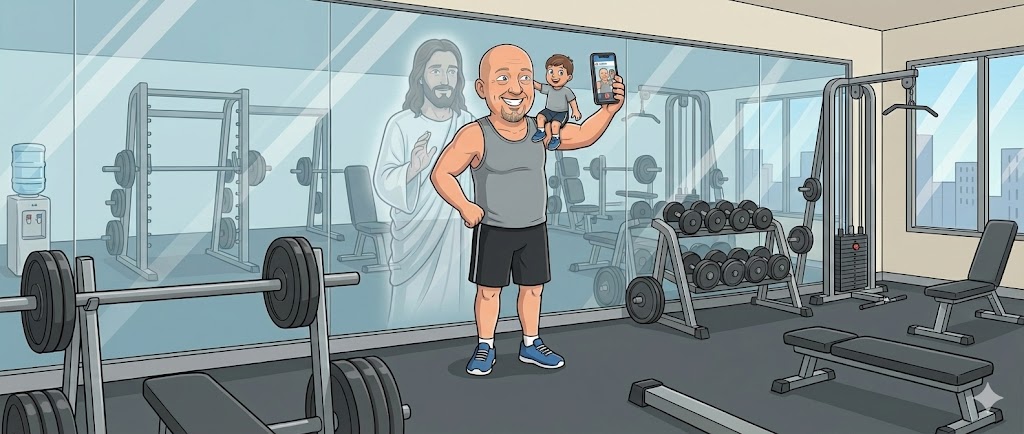
Most people who grow up in the church operate on a Membership Model. They believe that because they were "installed" into the system early—through baptism or just being raised in the environment—they are officially part of the network.
The Reality Check: In the world of tech, having a gym membership card in your wallet doesn't mean you're actually in shape. You have to actually go to the gym and do the work. Similarly, having the "Christian" label doesn't mean the system is running in your life. Christianity isn't a social club; it’s a Transformation. If the "software" hasn't changed how you handle your money, your relationships, or your private thoughts, then the program isn't actually running. You’re just looking at the wallpaper.
2.0 The Owner: Is Jesus an Influencer or the Admin?
2.1 The "Nice Guy" Emulation
Many people treat Jesus like an online influencer. They "follow" Him, they like His quotes about love and peace, and they think He’s a great moral example. But following an influencer doesn't change your life; it just changes your feed. This is an emulation of faith, not the real thing.
2.2 The Sovereign Admin
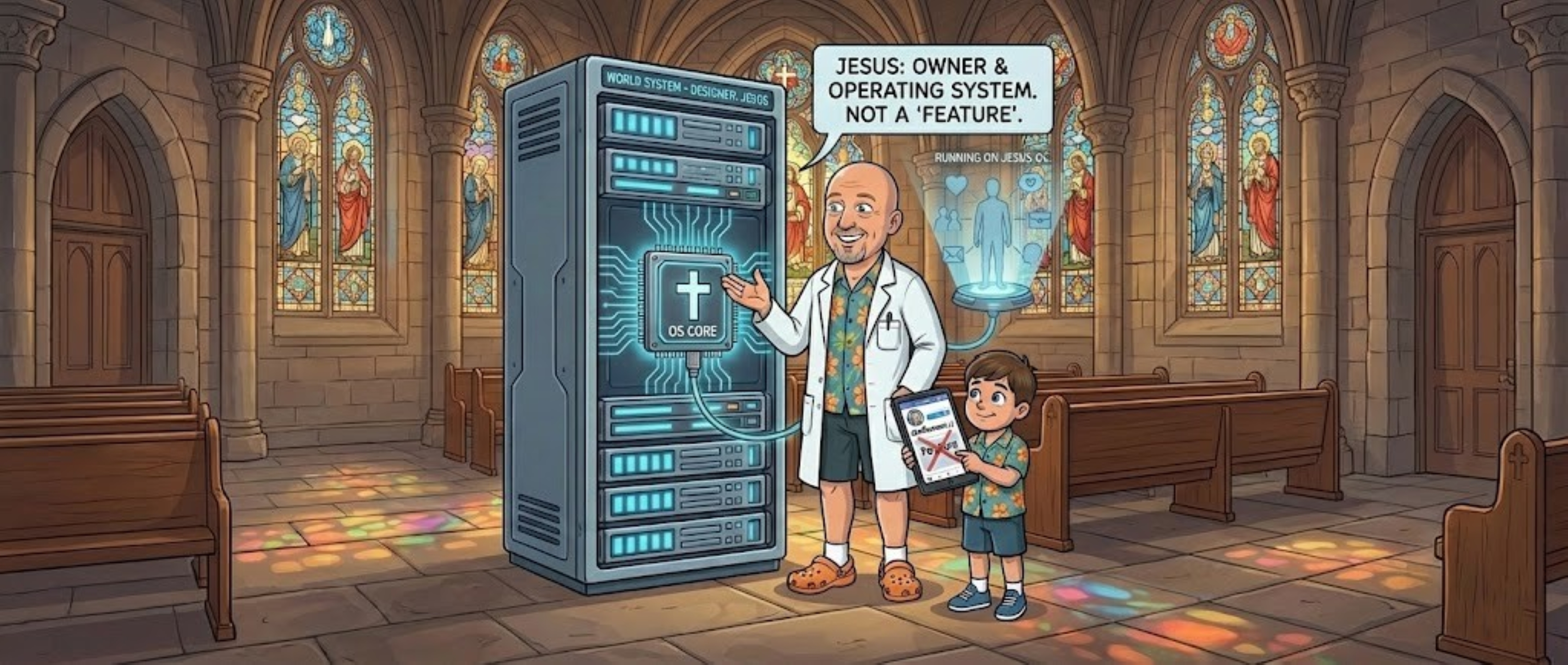
The claim of the Bible is that Jesus isn't an influencer; He is the Owner of the System.
- The Logic: He didn't come to give us better "community guidelines." He came to take control of the machine.
- The Reality: If He is the Designer of the world, then He isn't a "feature" you add to your life when you're bored. He is the Operating System your entire life is supposed to run on.
3.0 The Logic: The Cracked Screen and the Replacement
Every human being is running on a "cracked screen." We have a virus called Selfishness (Sin) that eventually causes the whole system to crash. We try to fix it with "self-help" stickers or by being "a good person," but those are just cosmetic fixes for a shattered display.
Here is the logic of the Gospel: The Designer didn't send a repair manual; He sent a Replacement.
- The Trade: We broke the device. Jesus took our broken, shattered device and handed us His brand-new, perfect one.
- The Transaction: He took the "Fatal Error" (Death) onto Himself so we could have His "Clearance" (Life).
If you aren't taking this seriously, it’s like being offered a free, top-of-the-line smartphone upgrade to replace your broken one, and you’re choosing to keep the one with the glass falling out.
4.0 The Runtime Environment: The "Good Deeds" Bug
4.1 The "Offline Mode" User
This person assumes they are "all set" because of their history, but they ignore the Admin all week. Faith that only happens on Sunday is like being in Offline Mode. You aren't getting updates, you aren't syncing with the Cloud, and you have no real-time data from the Admin.
4.2 The "In-App Purchase" Fallacy

Then there are the people who do a ton of good things and believe they are earning their way into the system. But you cannot buy a trillion-dollar company with gift cards. No matter how many you collect, it is simply the wrong currency.
- The Gap: There is a massive gap between "trying to be perfect" and "actually being perfect."
- The Solution: Jesus didn't come to help you "try harder." He came to close the gap. He lived the perfect life that we couldn't, and through faith, He transfers that "Perfect" status to your account.
5.0 The Final Log Off: Authentication vs. User Effort
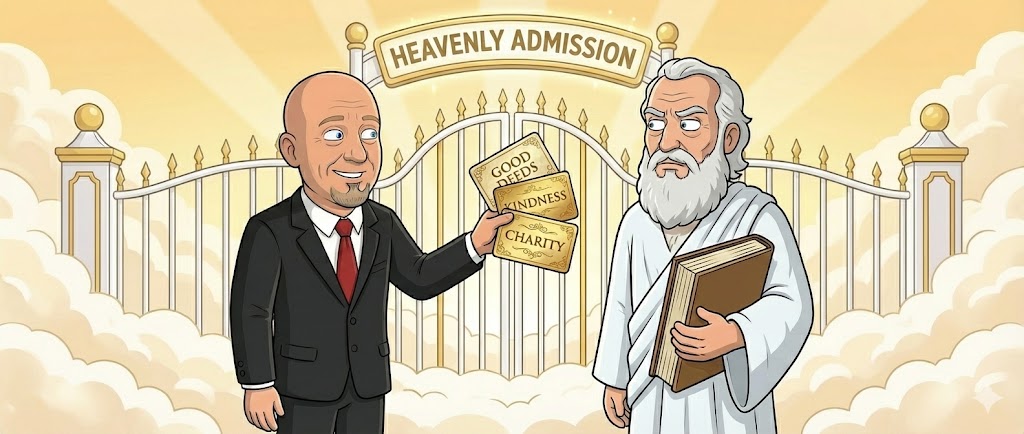
When we reach the end of the "Simulation" (Death), every user faces the Final Audit. Most people are betting their future on being "nice." But Niceness is not a currency recognized by the Host Server.
- The Scale Problem: Trying to "earn" your way into a perfect Heaven with "good deeds" is like trying to pay off a $100 Billion debt with frequent flyer miles. No matter how many you collect, they aren't the right legal tender to clear the ledger.
- The "Attendance" Glitch: Church attendance is just background noise in the system logs. It’s like having an app installed on your phone that you never actually use.
The security protocol of Heaven is binary: you are either Perfect or you are Not. Because we are all "non-compliant" (Sinners), we cannot generate our own access code. You don't get in because of your "History" or your "Good Deeds" folder. You get in because your User ID is Whitelisted by the Admin Himself because you actually know Him and He knows you.
6.0 The Output: Evidence of a Working System
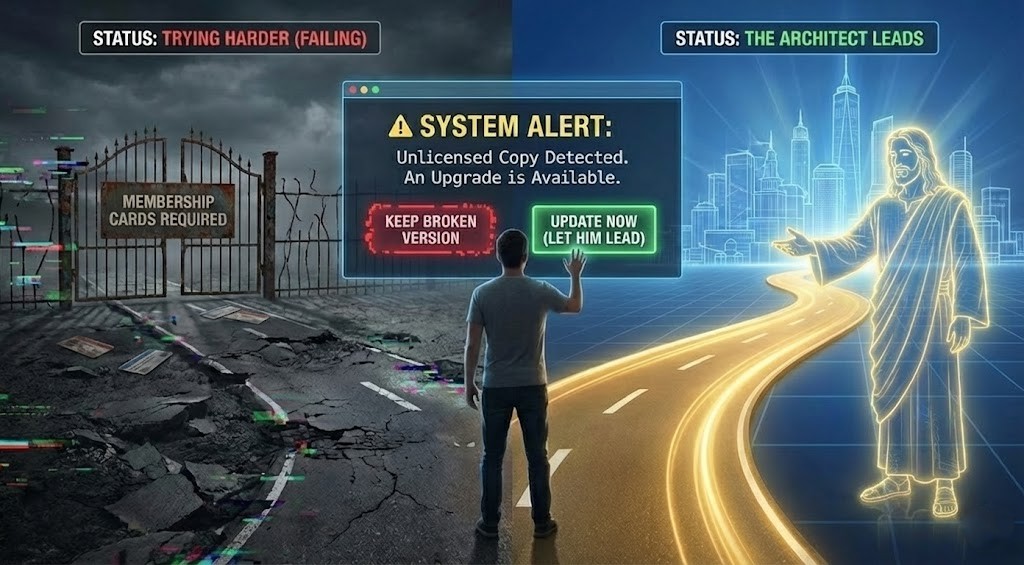
In tech, we look at Telemetry—the data that proves a program is actually doing what it was designed to do. If you have an app that claims to be a "Step Tracker" but it never records a single step, you know the app is broken or not actually running.
- The Root vs. The Fruit: Faith is the Root (the connection to the Admin); good works are the Fruit (the natural output).
- The Logic: You don't perform "good works" to get a connection; you perform them because the connection is already live.
If you truly put your faith in Jesus and accept His gift, your "code" will naturally change. You will find yourself wanting to help others and live with integrity, not to earn a spot, but because the Admin is now running the system. If there is zero "output" in your life, you need to check if you ever actually hit the "Install" button. Church attendance gives us the opportunity to fellowship with other believers as well as worship Jesus and thank him for the undeserved gift we now have. He isn’t taking attendance, but he wants you there, and you will now want to be there too! Its like going to the spa for the soul. You leave energized for the day ahead, ready to live out your faith in everything you do.
7.0 Conclusion: Update Now?
If you’ve realized that you’ve been running an "unlicensed copy" of faith—something that looks like the real thing but doesn't actually work—it’s time for an Upgrade.
Stop assuming the system will just "work it out" in the end. The Architect isn't looking for "Membership Cards"—He is looking for people who are willing to let Him take the lead. The prompt is on your screen right now. You can keep running the broken version, or you can hit "Update" and start the real relationship.
What’s it going to be?