PREFACE: THE ANALYST'S NOTE
The search for truth begins with the unknown.
To the Seekers, the Doubters, and the Intellectually Honest:
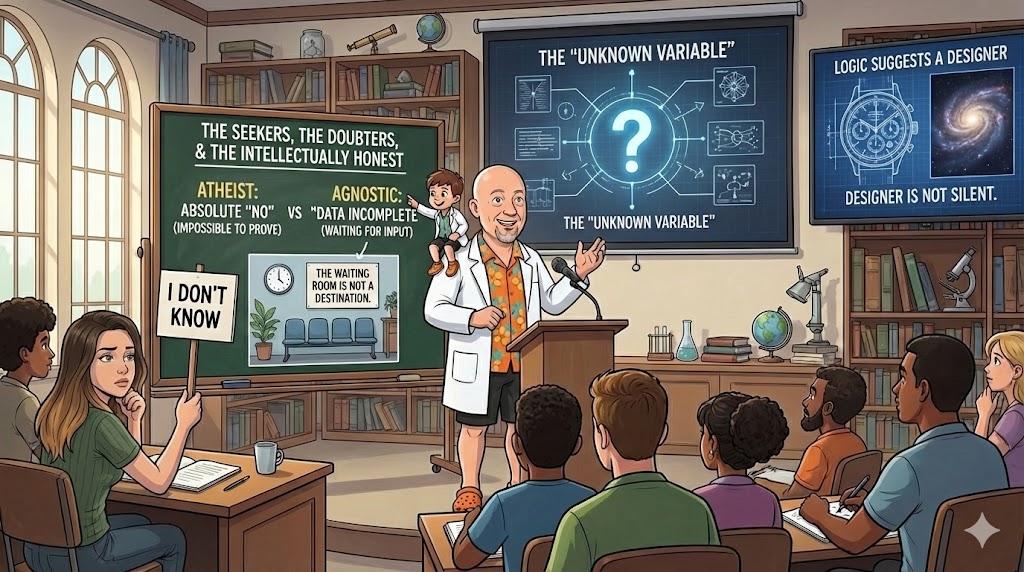
In my years of teaching, I have found that the most honest answer a student can give is, "I don't know."
False confidence is dangerous. Pretending to have answers when you haven't done the research is intellectual laziness. This is why I have a deep respect for the Agnostic. Unlike the Atheist, who claims absolute knowledge that there is no God (a claim impossible to prove), the Agnostic simply says, "The data is incomplete. I am waiting for more input."
But here is the danger: "I don't know" is a valid starting point, but it is a terrible destination. You don't stay in the waiting room forever; eventually, the doctor calls your name.
In this file, we are going to analyze the "Unknown Variable." We will look at why logic suggests there is a Designer, and why that Designer is not as silent—or unknowable—as you might think.
1.0 The Common Ground: The "Something"
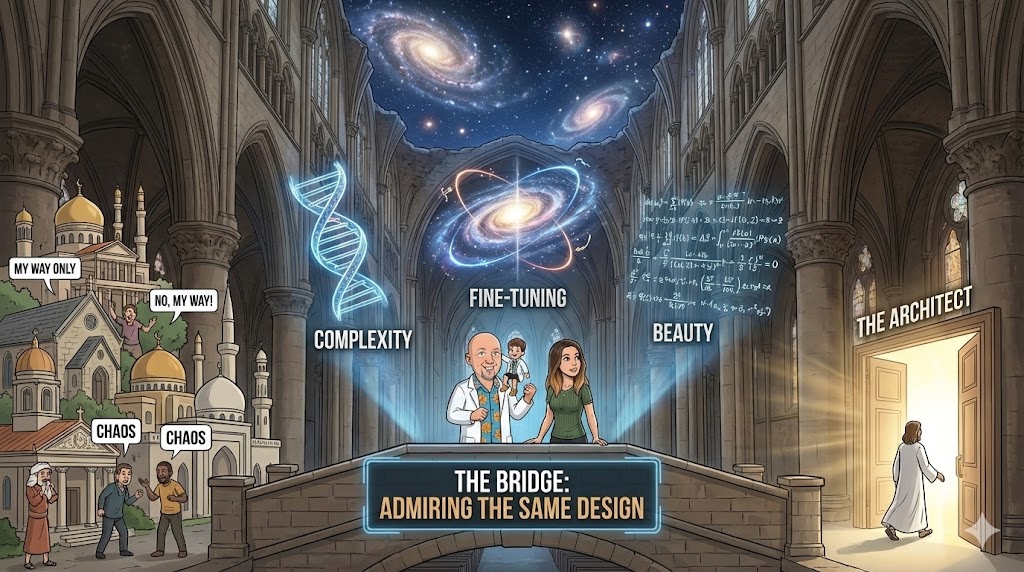
Most Agnostics I meet are not anti-God; they are often just anti-confusion. You look at the complexity of the universe—the DNA code, the fine-tuning of gravity, the beauty of mathematics—and you admit: "Something is out there."
- The Agreement: Christians and Agnostics agree on a massive premise: The universe is not a random accident. It feels engineered. We both look at the "Hardware" of creation and see the undeniable signature of a Super-Intellect.
- The Struggle: Your hesitation isn't about whether an Architect exists; it's about the "fan clubs" that claim to speak for Him. You see thousands of religions, all claiming to be the "one true way," often contradicting each other and behaving badly. It feels safer to acknowledge the Creator but reject the organized chaos of religion.
- The Bridge: Here is where we align: I agree that religion can be messy, man-made, and confusing. But we both agree that the building didn't build itself. You see the architecture and respect the Architect enough not to put Him in a box too quickly. I respect that. We are standing in the same cathedral, admiring the same design; I am just claiming that the Architect has finally walked into the room to introduce Himself.
2.0 The Agnostic Spectrum: Identifying Your Profile
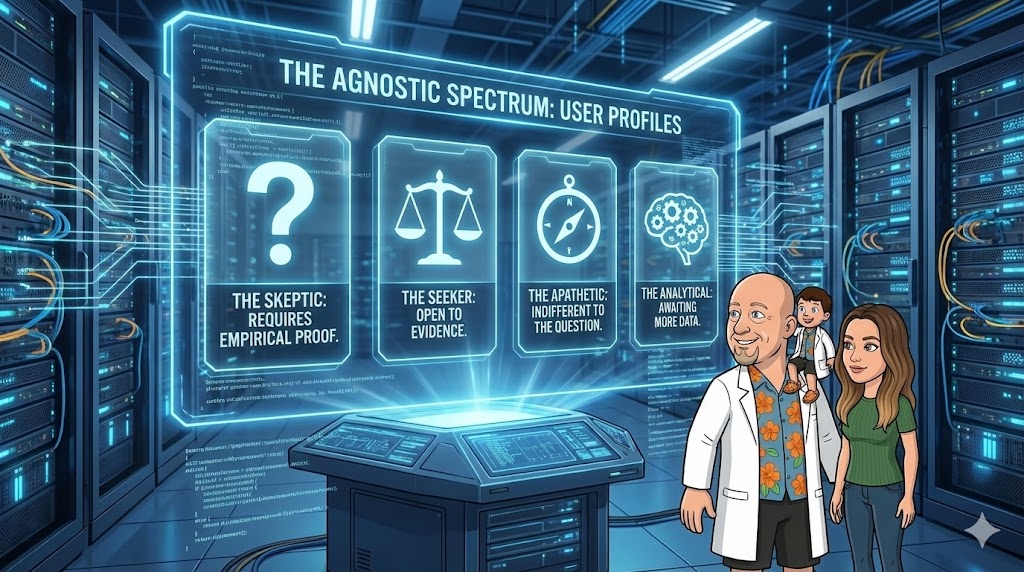
In computer science, a "User" is too broad a term. To build good software, we create "User Profiles" to understand the specific needs and limitations of the person behind the screen.
"Agnostic" is also too broad a label. It is a bucket that holds very different worldviews. Before we proceed, I want to identify who I am talking to. In my analysis, most people reading this fall into one of four specific profiles. Which one are you?
2.1 The Intellectual Agnostic ("The Data Analyst")
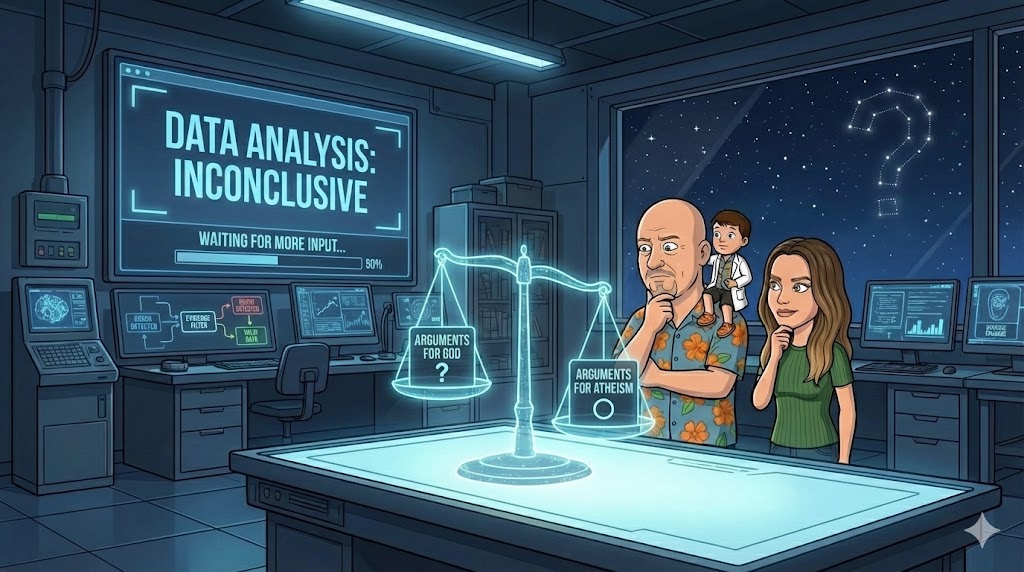
You are open to the existence of God, but you are strictly evidence-based.
- The Mindset: You don't have an emotional axe to grind. You simply look at the arguments for God and find them inconclusive. You look at the arguments for Atheism and find them arrogant.
- The Stance: "I am willing to believe, but I need a smoking gun. Show me the data, and I will follow it. Until then, I suspend judgment."
- The Validation: I respect this. You are using your mind the way it was designed—to filter error. You are not stubborn; you are careful.
2.2 The Disillusioned Agnostic ("The Deconstructed")
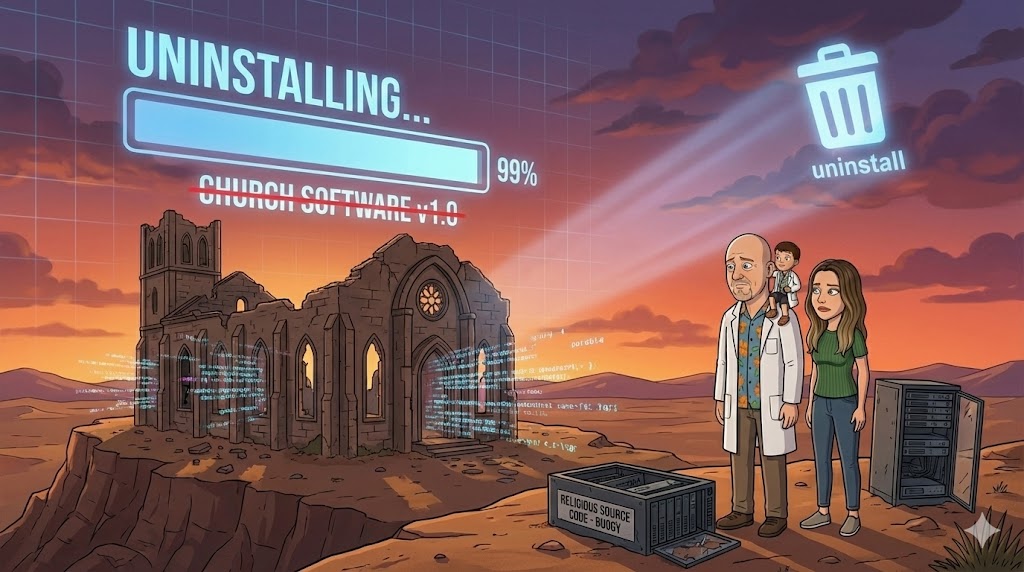
You didn't start as an agnostic; you likely grew up in a religious home.
- The Mindset: You saw the "source code" of religion up close, and it was full of bugs. You saw hypocrisy in leadership, judgment instead of love, or anti-intellectual answers to hard questions ("Just have faith").
- The Stance: "I believe God might be there, but I don't trust the people who claim to represent Him. If the Church is the software, I’ve uninstalled it."
- The Validation: Your skepticism isn't a rebellion against God; it's a rejection of bad representation. You aren't running from the truth; you are running from a lie.
2.3 The "Hard" Agnostic ("The Philosopher")
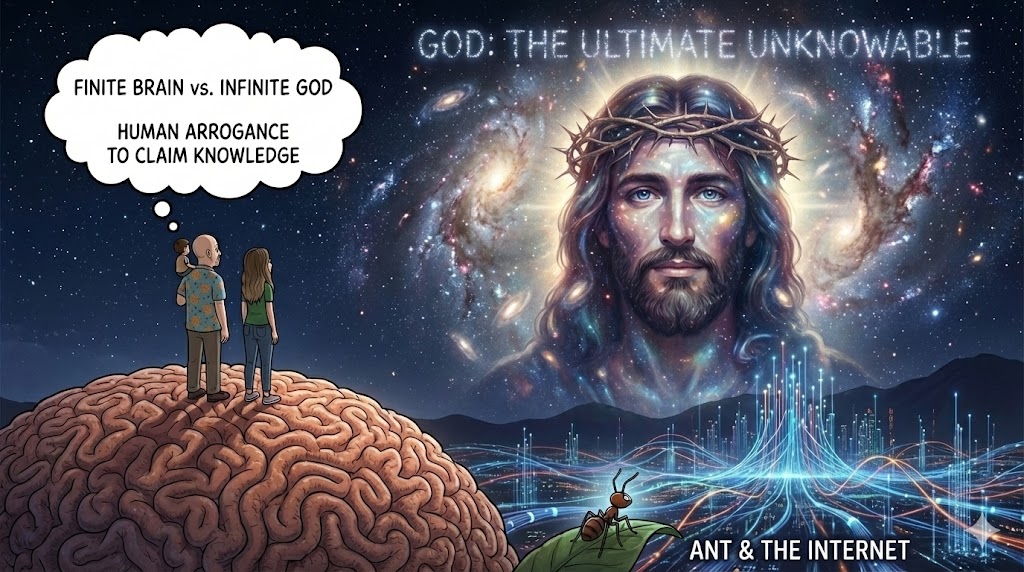
Your objection is philosophical. You believe that a finite human brain is incapable of comprehending an Infinite God.
- The Mindset: Trying to understand the Creator of the Universe is like an ant trying to understand the Internet. It’s not just that we don't know; it's that we can't know.
- The Stance: "God is the Ultimate Unknowable. To claim you know His name or His will is the height of human arrogance."
- The Validation: This is a position of humility. It acknowledges the vast gap between the creature and the Creator.
2.4 The Pragmatic Agnostic ("The Apatheist")
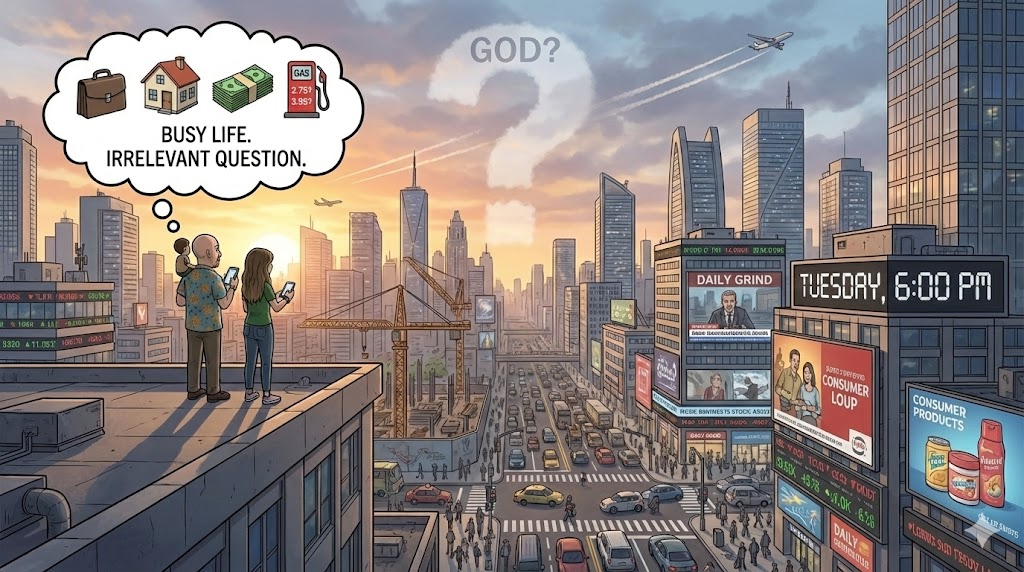
For you, the question is irrelevant to your daily operations.
- The Mindset: You are busy. You have a career, a family, and bills. Whether or not a God exists doesn't seem to change the price of gas or the stress of your Tuesday.
- The Stance: "Maybe He's there, maybe He isn't. But He seems silent, and I have a life to live. I'll find out when I die."
- The Validation: This is honest. If God is silent and inactive, then ignoring Him is the most logical response.
The Synthesis: If you found yourself in any of these profiles, I have good news. You are not "lost" or "confused." You are simply waiting for a signal that cuts through the noise. Let’s see if we can find it.
3.0 The Logic of Intent: Why Us?
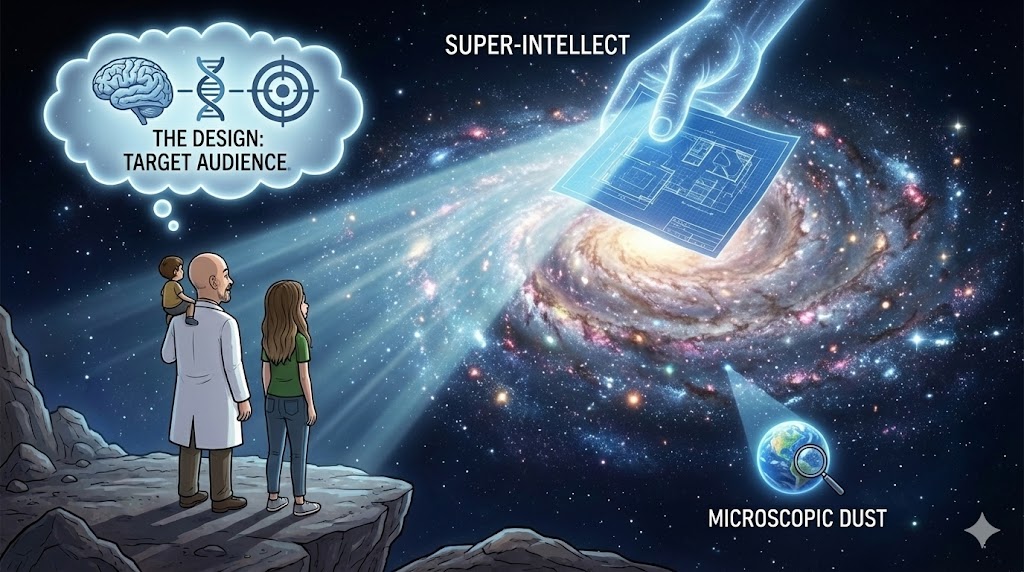
If a Super-Intellect created the universe, we have to ask the hard question: Why would He care about us? To a cosmic observer, we are microscopic biological dust on a tiny rock. Why would the Architect of galaxies have an interest in communicating with us?
The answer lies in the design itself. Logic suggests we are not an afterthought; we are the target audience.
3.1 The Calibration (The Stage)
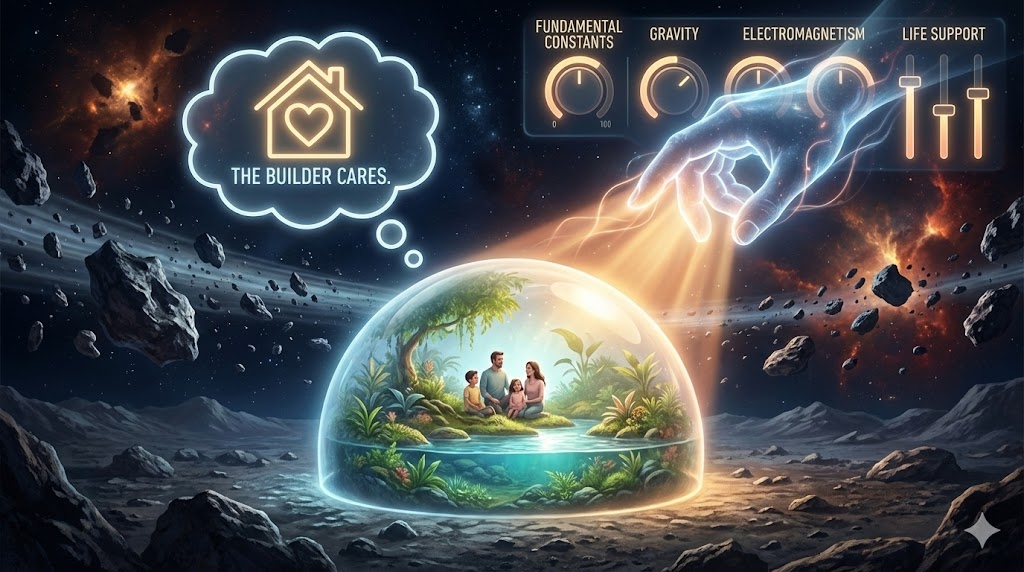
In physics, this is known as the Anthropic Principle. When we analyze the fundamental constants of the universe, we find that they are suspiciously fine-tuned—not just for the existence of stars, but specifically for the existence of observers.
- The Logic: You don't build a hyper-complex, climate-controlled clean room unless you intend to put something valuable inside it. The universe is a hostile void, yet Earth is a perfectly calibrated "womb" designed to keep us alive.
- The Implication: The effort taken to build the house suggests the Builder cares about the resident.
3.2 The Compatibility (The Mirror)
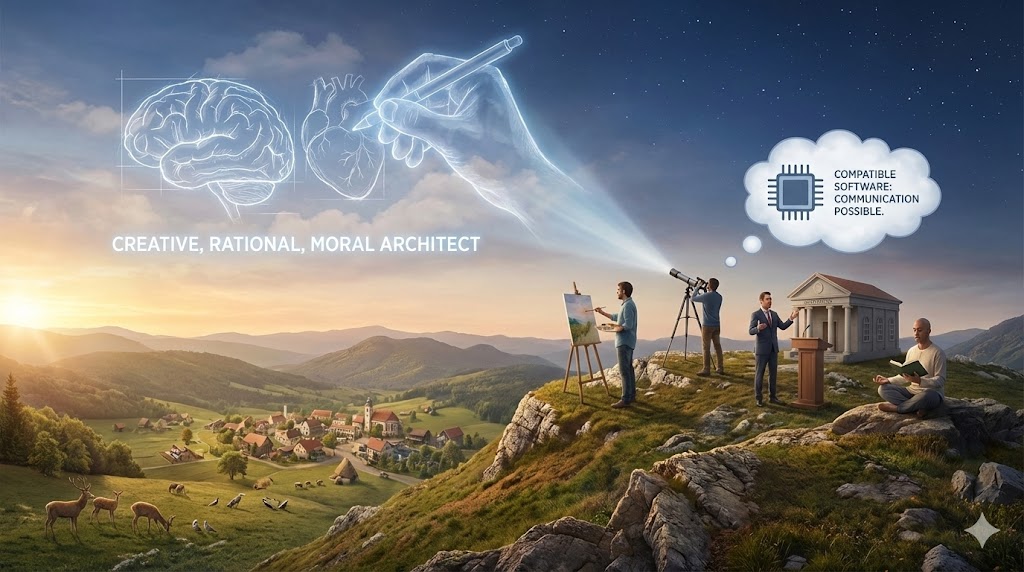
We are the only species that questions its own existence. We don't just survive (eat, sleep, reproduce); we create art, we do mathematics, we seek justice, and we long for purpose.
- The Logic: We possess the specific traits of the Architect. He is Creative; we create. He is Rational; we use logic. He is Moral; we crave justice.
- The Implication: We are "compatible software." You don't try to communicate with a rock or a tree because they cannot understand you. But God built a creature that shares His own "Operating System" of reason and love. He created us so that communication would be possible.
3.3 The System Dependency (The Unresolved Call)
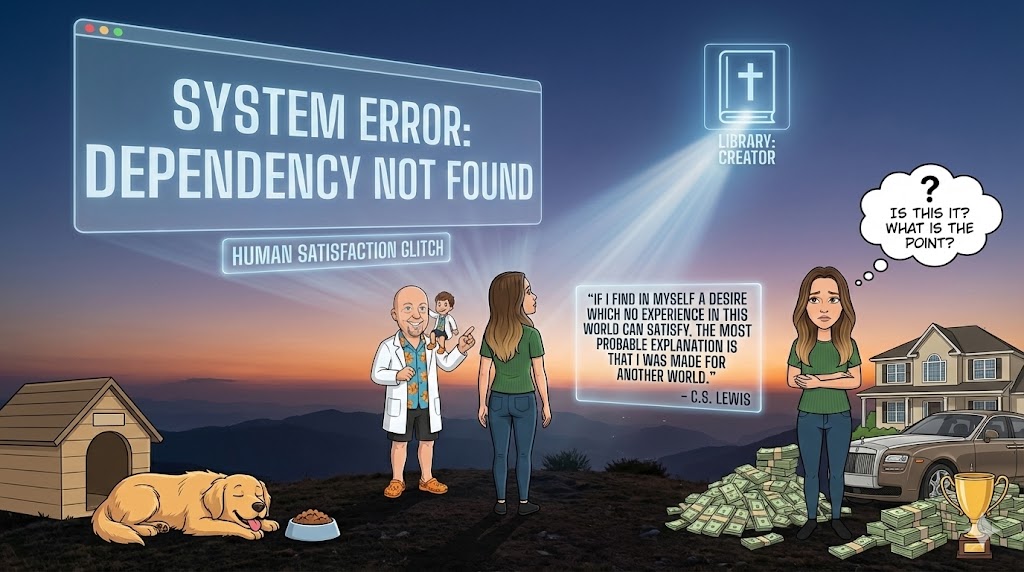
Finally, we must debug the "glitch" of human dissatisfaction. In programming, a "Dependency" is an external file or library that a software program needs in order to run. If the program calls for that file and cannot find it, the system throws an error.
- The Error Log: Humans are the only creatures on earth that are chronically dissatisfied. A dog is perfectly content being a dog; give it food and shelter, and its system is stable. But give a human money, safety, pleasure, and fame, and we still ask: "Is this it? What is the point?"
- The Logic: If we were merely biological machines, biological inputs (survival/reproduction) should satisfy us. But they don't. We are finite creatures who are obsessed with the Infinite. We crave eternal purpose, perfect justice, and unconditional love—none of which exist in the material world.
- The Lewis Protocol: C.S. Lewis debugged this perfectly: "If I find in myself a desire which no experience in this world can satisfy, the most probable explanation is that I was made for another world."
- The Verdict: Your emptiness is not a flaw; it is a feature. It is a hardcoded dependency. You are a program calling out for a specific "Library"—the Creator—and until you connect to Him, the system will remain incomplete. You weren't just made by God; you were made for God.
4.0 The Evidence Logs: God is Not Silent
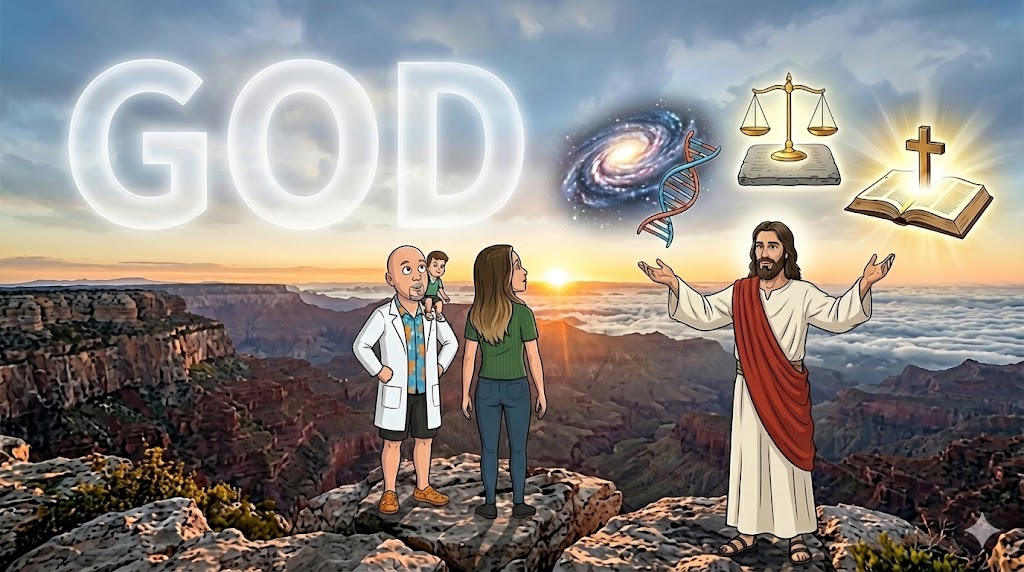
Agnostics often say, "If God exists, why is He playing hide and seek? Why doesn't He write His name in the sky?"
The Bible argues that He has written His name—He just used a different medium. The Apostle Paul, a scholar of his time, laid out three specific ways the "Unknown God" has made Himself known.
4.1 The External Log: The Hardware (Romans 1)
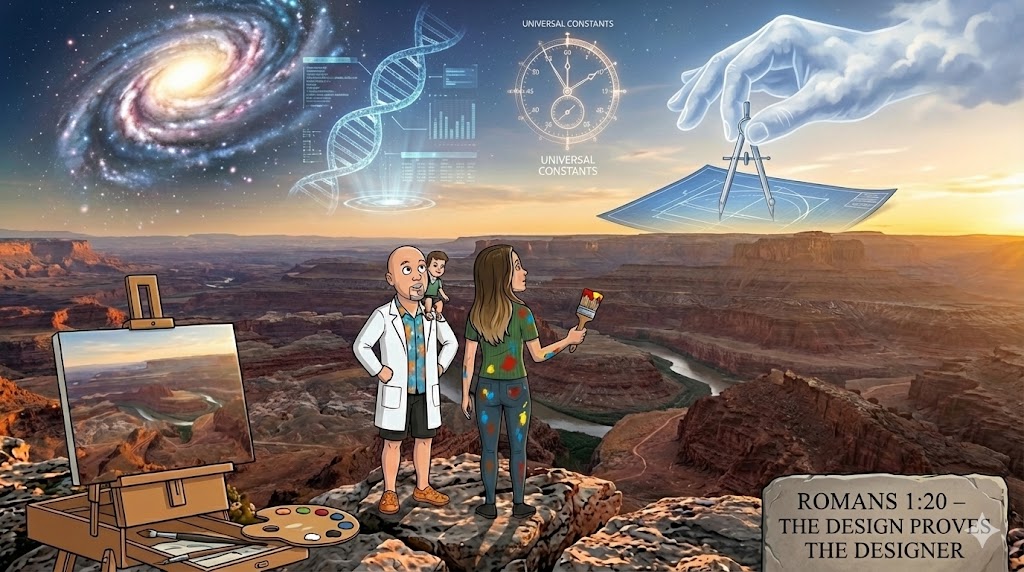
In Romans 1:20, Paul argues that "God’s invisible qualities—his eternal power and divine nature—have been clearly seen, being understood from what has been made."
- The Logic: If you walk into a room and see a painting, you know there was a Painter. You don't need to see the artist to know he exists; the painting is the proof.
- The Application: When science discovers that a single DNA strand contains 700 terabytes of data, or that the universe is fine-tuned to within a fraction of a percent for life to exist, that is not silence. That is a shout. The Agnostic claims there is no evidence, but Paul argues the "Hardware" of the universe is the evidence. The design proves the Designer.
4.2 The Internal Log: The Software (Romans 2)
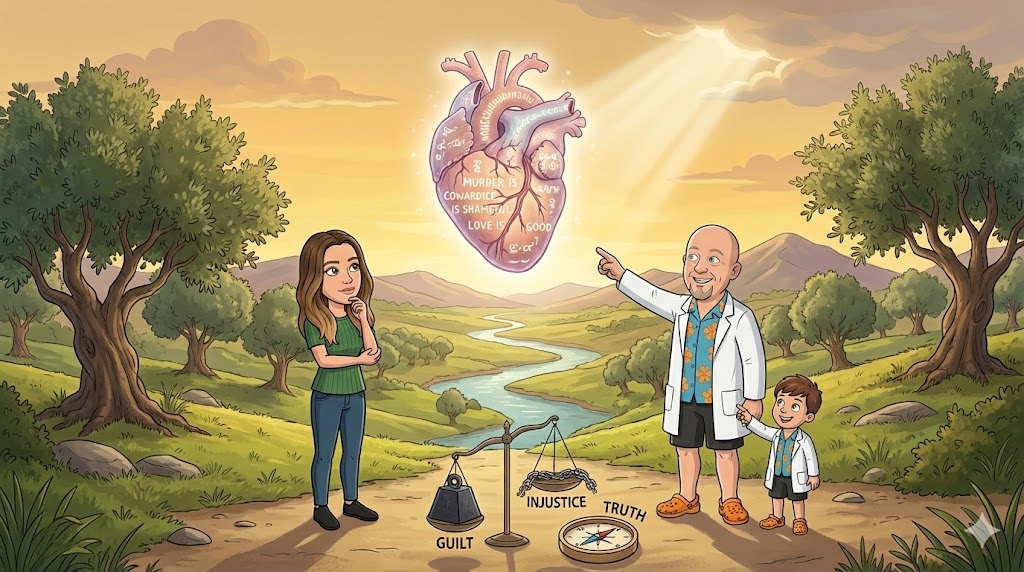
In Romans 2:15, Paul points to a second evidence stream: "The law is written on their hearts, their consciences also bearing witness."
- The Logic: Every human being, regardless of culture or religion, operates with a built-in "Moral Operating System." We all know that murder is wrong, that cowardice is shameful, and that love is good. Where did this code come from?
- The Application: If we are just random accidents of evolution, "Right and Wrong" shouldn't exist—only "Strong and Weak." But you feel guilt when you lie. You feel anger when you see injustice. That is your Conscience (literally "With Knowledge"). It is the factory-installed software from a Moral Creator.
4.3 The Historical Pivot: The Resolution (Acts 17)
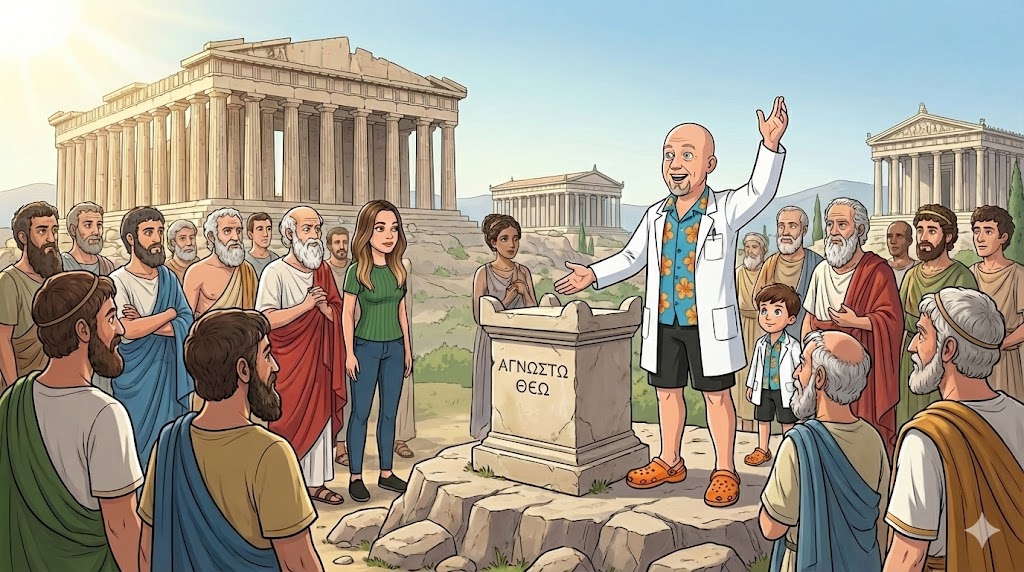
Finally, Paul brings this to a head in Athens. He stands before the Agnostics of his day who had an altar inscribed "TO AN UNKNOWN GOD."
He acknowledges their logic ("Something is out there") but challenges their conclusion ("We can't know Him").
"The God who made the world and everything in it is the Lord of heaven and earth... He is not far from any one of us." (Acts 17:24, 27)
Paul’s argument is simple: God did not remain an abstract concept. He entered the system to introduce Himself.
4.4 The Interface: The Historical Jesus
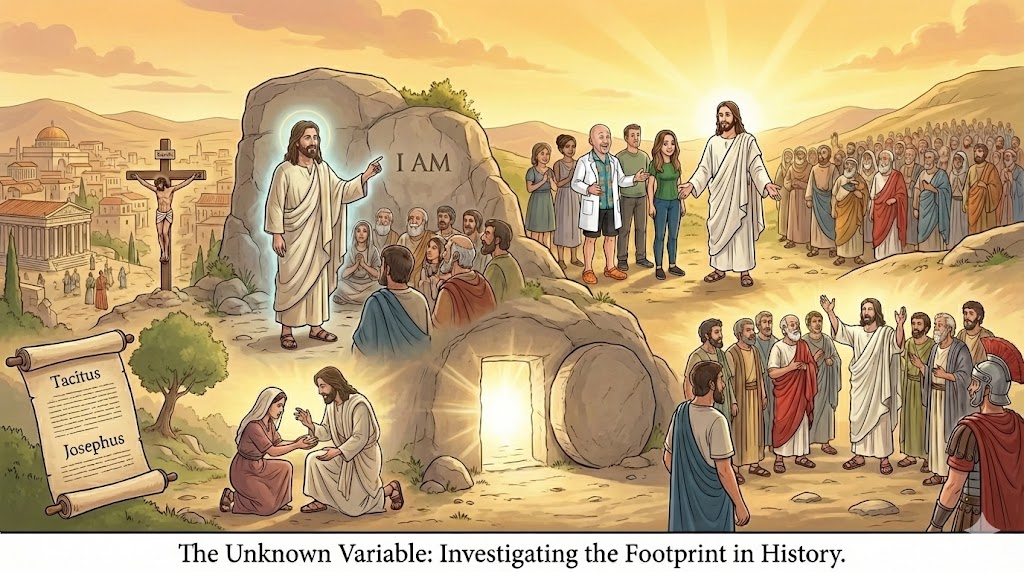
This is where the "Unknown Variable" takes on a specific value. We are not asked to believe in a myth; we are asked to examine a Person who left a footprint in history that cannot be erased.
- He Lived (Verified History): Jesus is not a legend. His existence is confirmed not just by the Bible, but by hostile secular historians like Tacitus (Roman) and Josephus (Jewish), who record his life and execution.
- He Died (The Crucifixion): It is a historical certainty that Jesus was executed under Pontius Pilate. Even the agnostic scholar Bart Ehrman admits, "One of the most certain facts of history is that Jesus was crucified."
- He Claimed to be God (The Identity): Jesus did not leave us the option of calling Him "just a good teacher." Good teachers don't claim to forgive sins (a prerogative of God alone) or say, "Before Abraham was born, I AM" (John 8:58). He claimed to be the Architect in human form.
- He Performed Miracles (The Power): Interestingly, in the ancient Jewish Talmud, his enemies never denied that He performed miracles; they simply claimed He did them by "sorcery." They couldn't deny the event, so they attacked the source.
- He Rose (The Resurrection): This is the pivot point. After His public execution, His tomb was found empty. The Roman guards couldn't produce a body. The Jewish leaders couldn't produce a body.
- He Was Seen (The 40 Days): This wasn't a hallucination by one grief-stricken person. For 40 days, He appeared to groups of people. He ate with them. He spoke with them. The Apostle Paul records a creed dating back to within a few years of the event stating that over 500 people saw Him at once (1 Cor 15:6).
The Logic Check: Why would 11 terrified disciples, who ran away when He was arrested, suddenly become bold martyrs willing to die for the claim that "He is alive"? People die for lies they think are true, but nobody dies for a lie they know is false. They saw the System Admin.
5.0 The Cross-Reference Check: The Universal Variable
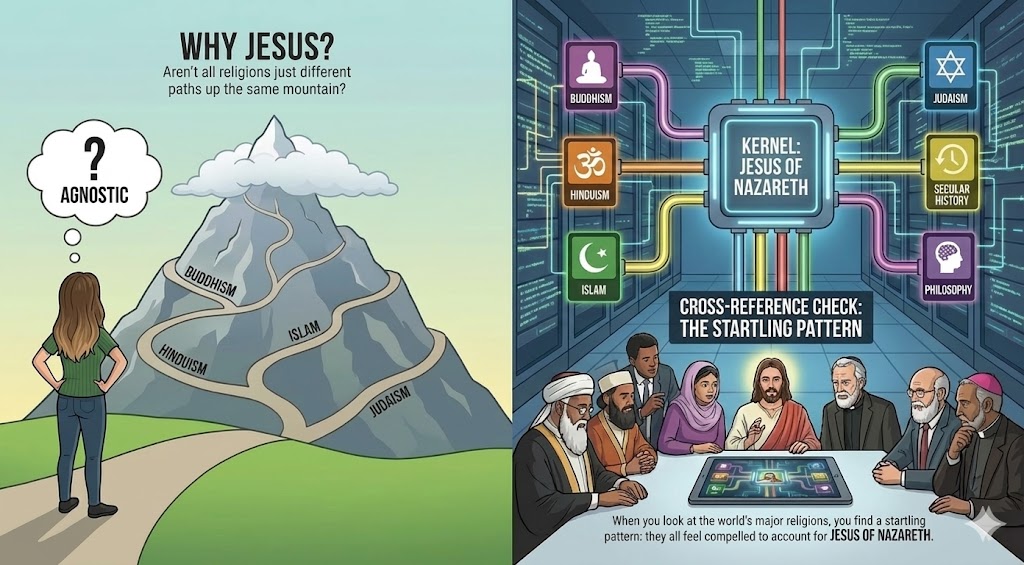
Agnostics often ask, "Why Jesus? Aren't all religions just different paths up the same mountain?"
To answer this, we need to run a Cross-Reference Check. In the world of software, if multiple independent programs all reference the same core file, that file is likely the Kernel—the central component of the system.
When you look at the world’s major religions, you find a startling pattern: they all feel compelled to account for Jesus of Nazareth.
5.1 The "Competitor" Analysis: Islam
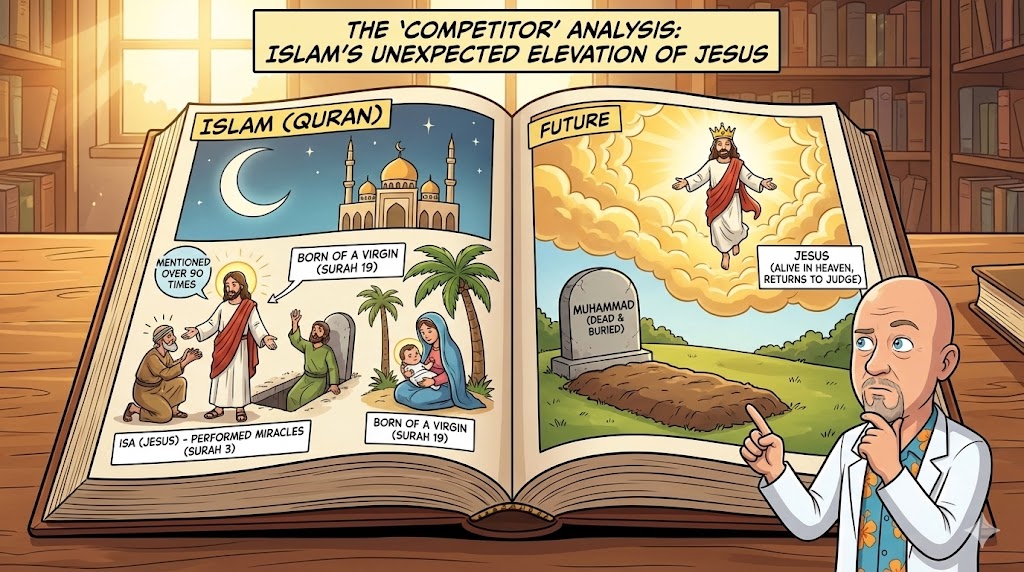
Islam is the second-largest religion in the world and Christianity's primary theological competitor. Yet, the Quran does not ignore Jesus (whom they call Isa); it elevates Him.
- The Specs: The Quran mentions Jesus by name over 90 times (more than Muhammad). It confirms He was born of a Virgin (Surah 19). It confirms He performed miracles like healing the blind and raising the dead (Surah 3). It confirms He was sinless (unlike Muhammad, who the Quran says had to ask for forgiveness).
- The Future: Most shockingly, Islam teaches that Muhammad is dead and buried, but Jesus is alive in Heaven and He is the one who will return at the end of time to judge the world.
- The Logic: Why would a competing religion feature the "Rival CEO" in their own brochure? Because Jesus’ footprint is too large to ignore. They have to explain Him.
5.2 The Hostile Witness: The Talmud
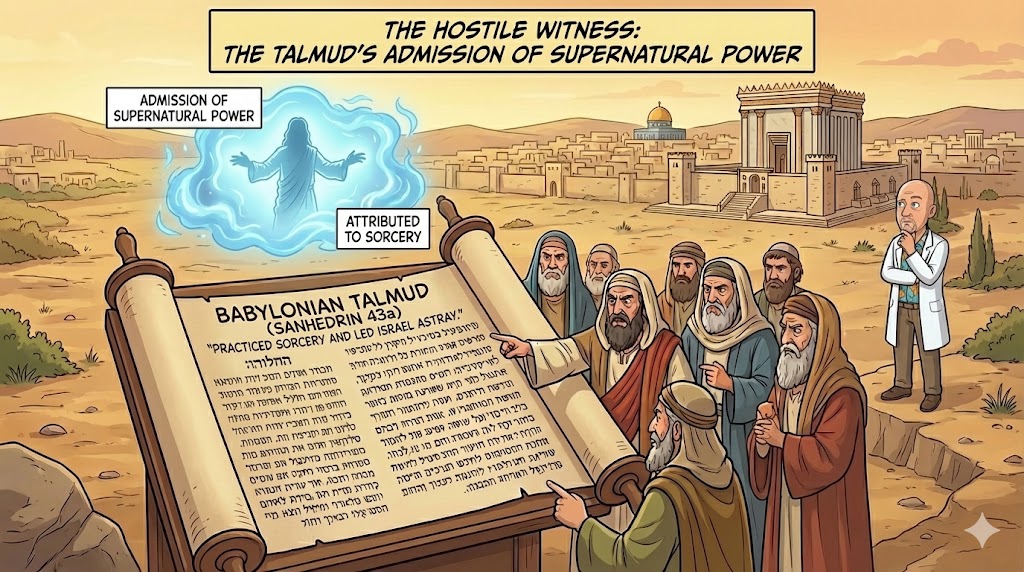
We see the same pattern in ancient Judaism. The Jewish leaders rejected Jesus as the Messiah, but look at how they rejected Him.
- The Admission: The Babylonian Talmud (Sanhedrin 43a) does not say Jesus was a fake who tricked people. It says He was executed because He "practiced sorcery and led Israel astray."
- The Implication: Do you see what happened? Even His enemies admitted He had supernatural power. They couldn't deny the miracles (the data), so they tried to attribute the power to a different source (sorcery). They validated the event while disputing the cause.
5.3 The "Master Key"
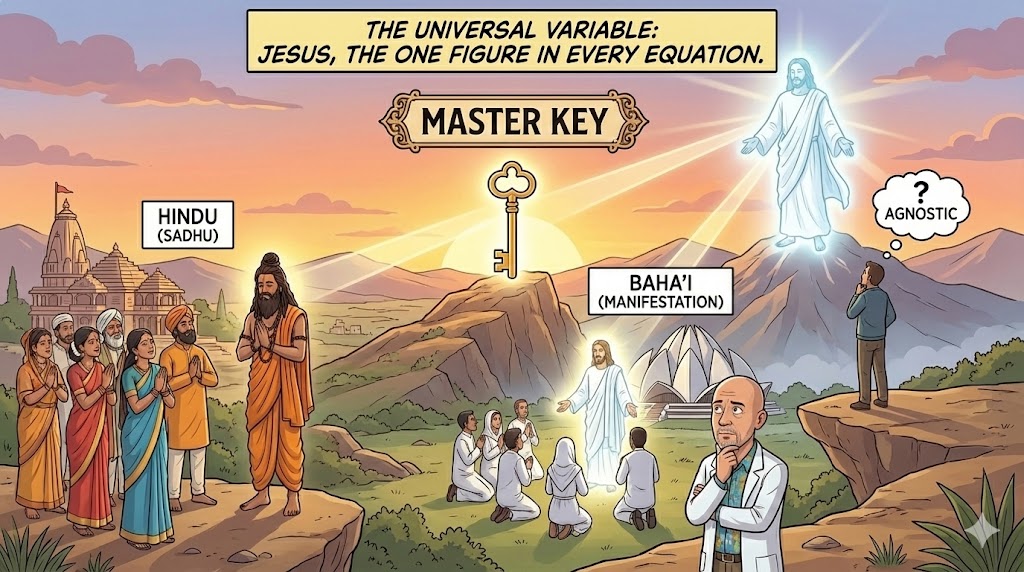
You see this everywhere. Many Hindus revere Jesus as a Sadhu. The Baha'i view Him as a "Manifestation of God." Christianity does not need Muhammad, Buddha, or Krishna to be true. But almost every other worldview attempts to weave Jesus into their tapestry.
The Verdict: Jesus is the Universal Variable. He is the one figure that fits into every equation, yet stands above them all. When the "competitors" all agree that He is special, powerful, and sinless, the Agnostic must ask: Why is He the standard by which everyone else is measured?
6.0 Conclusion: The Verification Experiment
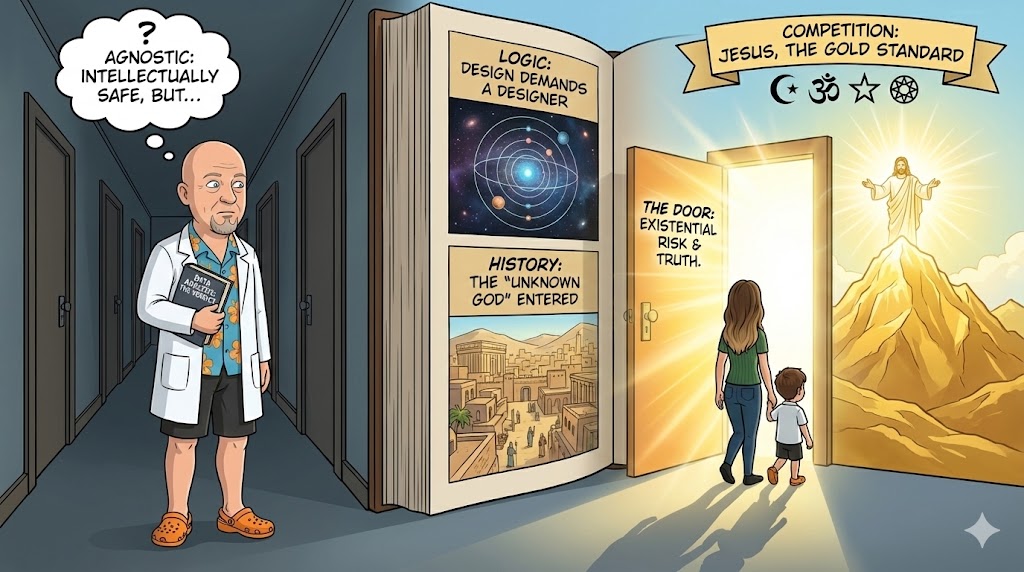
We have analyzed the data.
- Logic: The design of the universe demands a Designer.
- History: The "Unknown God" entered history in the person of Jesus.
- Competition: Even rival worldviews admit Jesus is the gold standard.
To the Agnostic, I say this: Your position is intellectually safe, but it is existentially risky. You cannot stand in the hallway forever; eventually, you have to open the door.
6.1 The Voice of the Variable
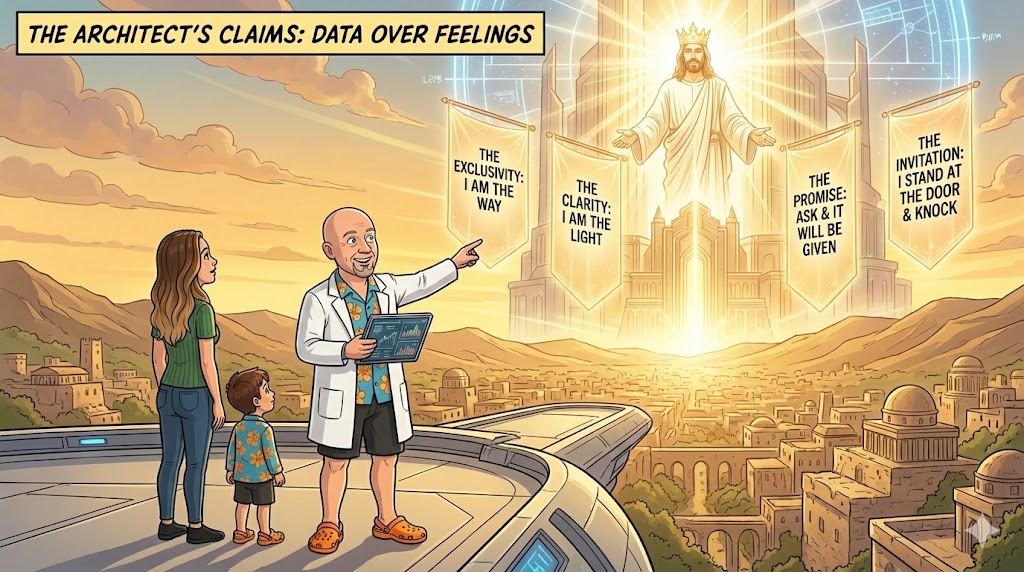
You might be waiting for a feeling. Don't. Look at the data. Jesus did not speak like a philosopher guessing at the truth. He spoke as the Architect explaining the building. Listen to the sheer audacity of His claims:
- The Exclusivity: "I am the way and the truth and the life. No one comes to the Father except through me." (John 14:6)
- The Clarity: "I am the light of the world. Whoever follows me will never walk in darkness, but will have the light of life." (John 8:12)
- The Promise: "Ask and it will be given to you; seek and you will find; knock and the door will be opened to you." (Matthew 7:7)
- The Invitation: "Here I am! I stand at the door and knock. If anyone hears my voice and opens the door, I will come in." (Revelation 3:20)
6.2 The 21-Day Protocol
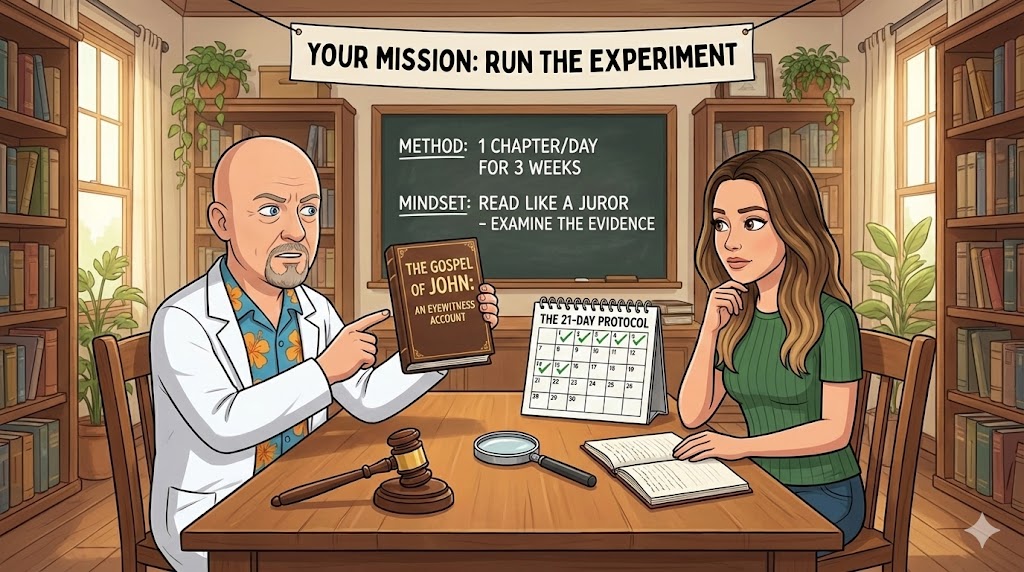
You claim you want evidence. Here is my challenge to you. Do not take my word for it. Run the experiment yourself.
- Your Mission: Read The Gospel of John.
- Why John? It was written by an eyewitness specifically for skeptics. It contains 21 chapters.
- The Method: Read one chapter a day for three weeks.
- The Mindset: Don't read it like a religious person. Read it like a juror. Look at the evidence. Look at how Jesus treats women, the poor, and the arrogant. Look at the claims He makes.
6.3 The System Test
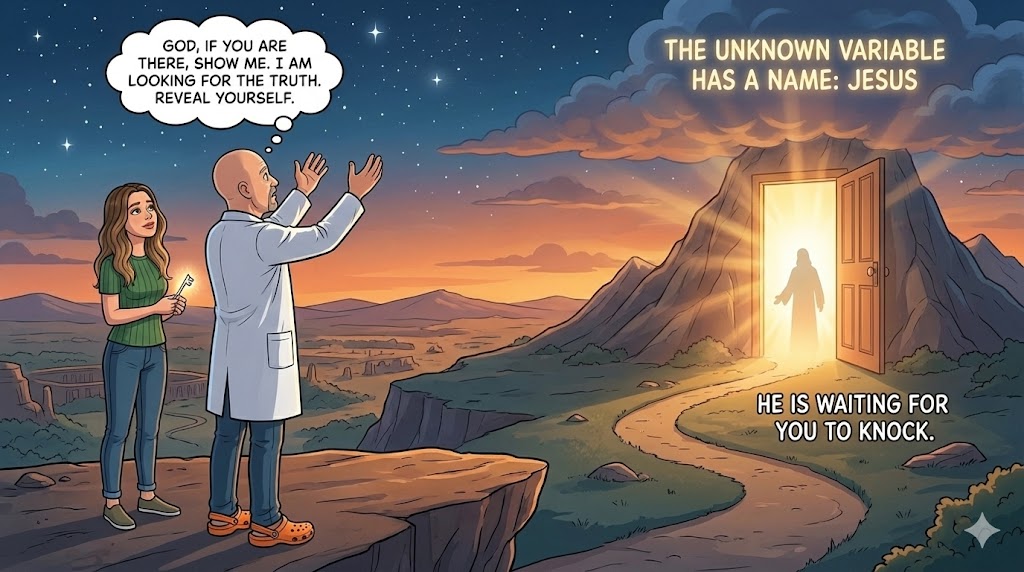
Finally, I challenge you to pray. Not a religious prayer, but an honest, logical one. If God is there, He can hear you. If He isn't, you're just talking to the ceiling, and you've lost nothing.
Try this:
"God, I don't know if you are there. But if you are, and if Jesus is who He claimed to be, show me. I am opening the file. I am looking for the truth. Reveal Yourself to me."
That is a dangerous prayer. It is the prayer of the "Seeking Agnostic." And based on the data, I predict you will get an answer.
The "Unknown Variable" has a name. His name is Jesus. And He is waiting for you to knock.