






QTM 105What do all these religions really believe?
Religions Compared
I have spent 25 years in the classroom teaching computer science and researching topics like AI—but I have spent even longer thinking about what makes a worldview true or false. I look at worldviews by asking: What is the main problem they see? What is the solution they offer? Do the pieces fit together?
As a Christian with 100% Ashkenazi roots, I approach this not as a fight, but as a conversation. I am not here to "slap you with the Bible"; I am here to compare beliefs fairly. We are going to look at the world's major faiths to see what each one actually teaches.
"Test everything. Hold on to the good." (1 Thessalonians 5:21)
1. The Dharmic Group: Cycles of Rebirth
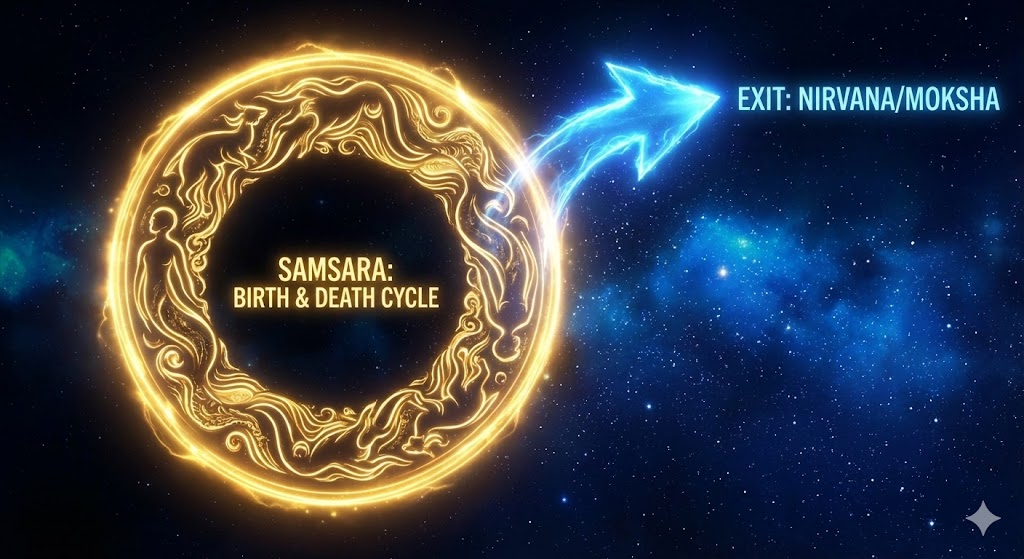
These faiths started in India and see time as a loop—birth, death, rebirth—not a straight line. The goal is often to escape that cycle through how you live (cause and effect).
1.1 Hinduism
Hinduism is a beautiful, ancient search for truth. It has thousands of "gods," but these are often seen as different faces of one ultimate reality called Brahman. The goal is Moksha—breaking free from the cycle of reincarnation. Karma (what you do shapes what happens to you) shapes your next life. We honor this tradition's deep commitment to the unseen reality.
1.2 Buddhism
Buddhism focuses on the human experience of suffering and how to end it. It does not focus on a supreme God; it focuses on attachment and desire as the root of pain. Nirvana is the state where desire is gone and the self is freed from the cycle of suffering.
2. The Abrahamic Group: Covenant and Law
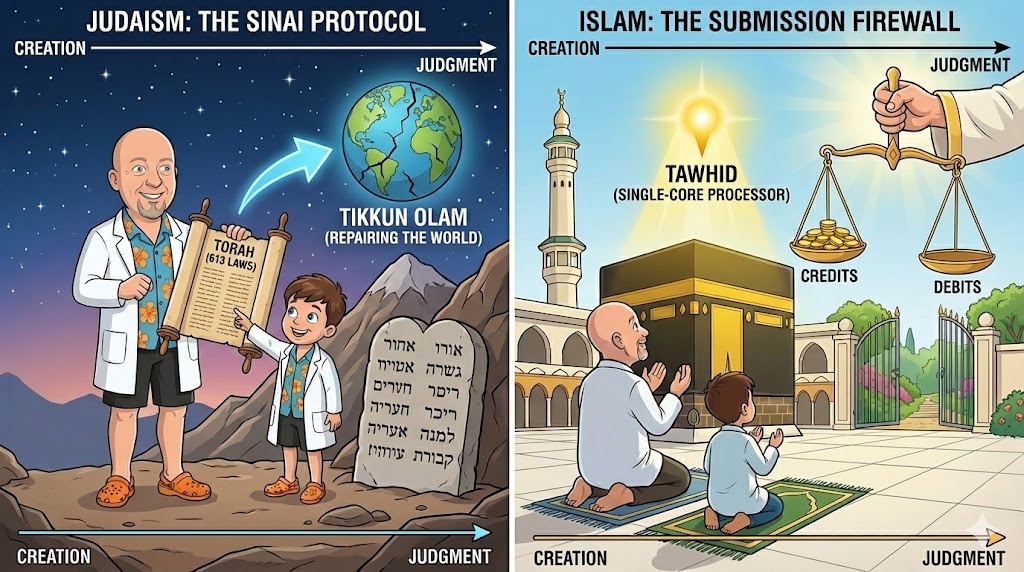
These faiths see time as a straight line—from creation to a final judgment. God makes a covenant (agreement) with people.
2.1 Judaism
This is the heritage I share and honor deeply. A religious Jew lives by a covenant with God. The focus is Tikkun Olam (Repairing the World) through obedience to the law (Torah). It is about restoring the world here on earth. It is a faith of deep history and weight.
2.2 Islam
Islam teaches strict discipline and order. We honor our shared roots in the God of Abraham. In Islam, God is one and indivisible (Tawhid). Entry into the "Garden" (paradise) is based on the Scales—weighing your good deeds against your bad at the final judgment.
3. Christianity: God Steps In

Christianity is built on the claim that God stepped into history to fix what humans broke. It is the only major faith where rescue comes by God's action, not by our own effort alone.
3.1 Catholicism
Catholic teaching stresses faith, works, and tradition. The Church guides believers through a lifelong process of growth in holiness. Sacraments (like baptism and communion) are seen as real ways God's grace reaches people and prepares them for eternal life.
3.2 Protestantism
Protestant teaching stresses Faith Alone (Sola Fide). Salvation is a gift that cannot be earned by how well we perform—it was paid for by Christ. The goal is a direct, personal relationship with God through what Jesus has already done.
4. Faiths That Add to the Story
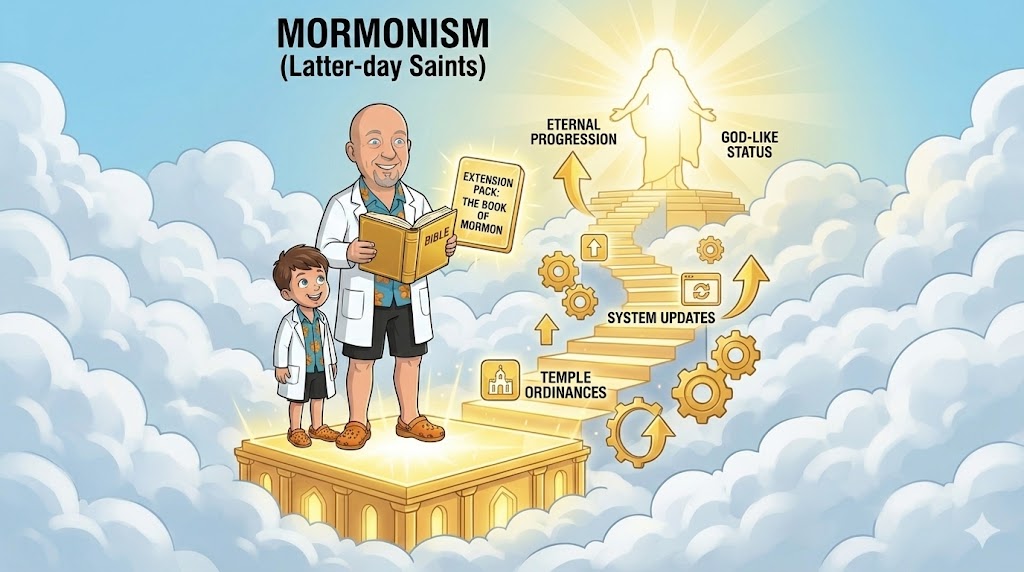
4.1 Mormonism (Latter-day Saints)
Latter-day Saints accept the Bible but also hold The Book of Mormon as scripture. They believe in "Eternal Progression"—that people can grow toward a godlike status in the next life through faithfulness and temple ordinances.
5. Quick Comparison
| Faith | Main problem | Main solution | Afterlife |
|---|---|---|---|
| Hinduism | Ignorance of oneness with Brahman | Karma and yoga | Reincarnation until moksha |
| Buddhism | Desire and attachment | Eightfold Path | Nirvana (end of suffering) |
| Judaism | Disobedience to the Law | Covenant and mitzvot (commandments) | Restoration on earth / world to come |
| Islam | Pride and rebellion | Five Pillars (deeds and submission) | Garden (judgment by the Scales) |
| Christianity | Sin (turning from God) | Grace (God's rescue through Christ) | Heaven (by God's mercy) |
6. Conclusion
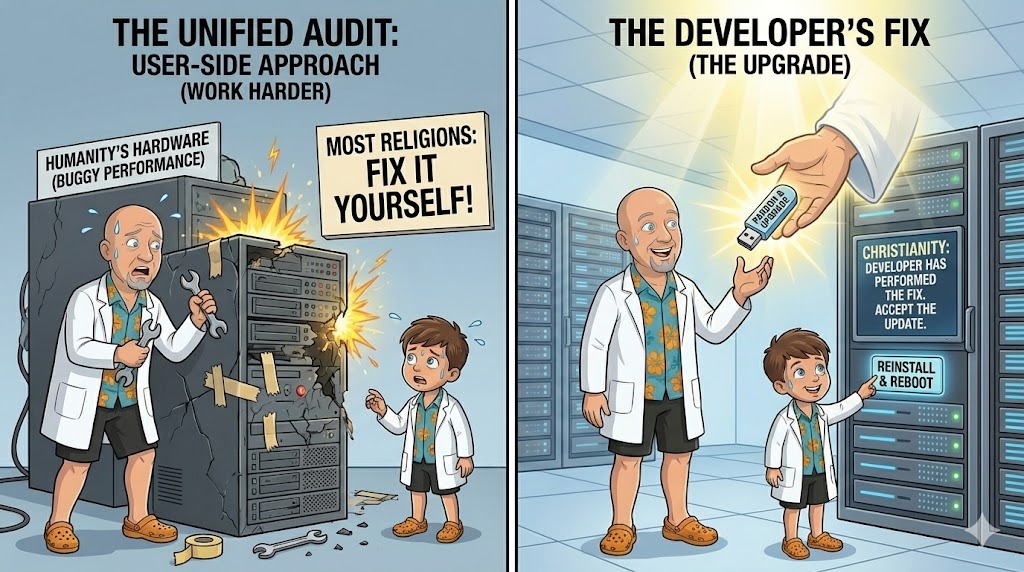
People everywhere are trying to make sense of life and what comes after. Most religions say work harder—fix yourself, follow the rules, earn your way. Christianity says the Creator has already provided the fix and is waiting for you to receive it.
As someone who cares about evidence, I have looked at the options. I do not want to stand before God on my own record; I want to be forgiven. That offer is available. You only have to turn to Christ and trust Him.